CosmosJul 15, 2026•2 min read
NASA's Telescope Just Spotted a Cosmic Body That Defies All Laws of Physics

Emre IpekyuzFounder & Science Writer
CosmosJul 15, 2026•2 min read
NASA's Telescope Just Spotted a Cosmic Body That Defies All Laws of Physics
Emre IpekyuzFounder & Science Writer
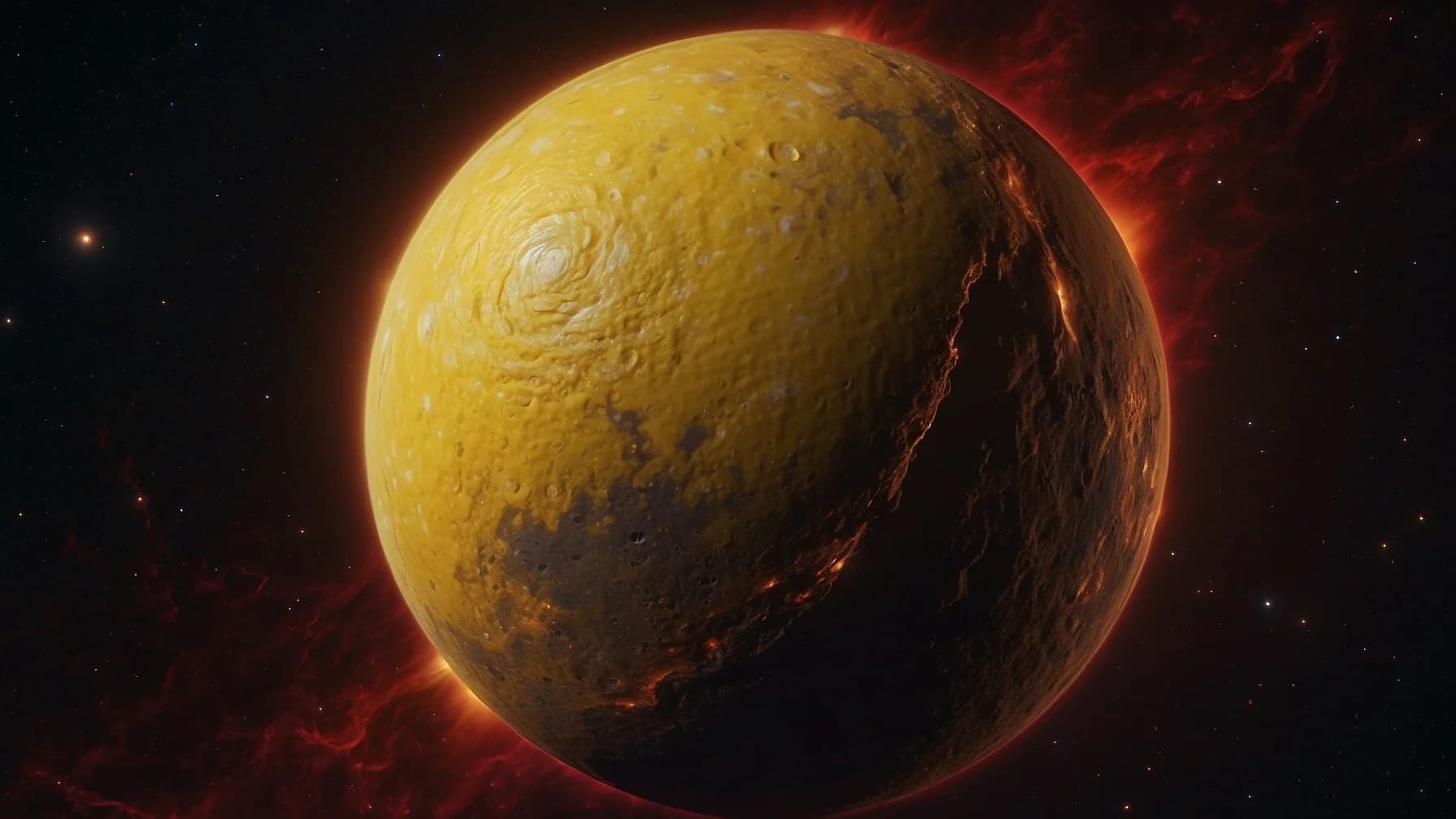
NASA just spotted an impossible planet that defies the laws of physics. It sits in a cosmic neighborhood where it simply shouldn't exist.
The standard rules of cosmic evolution state that massive gas giants only survive in the freezing outer boundaries of a solar system. However, recent planetary data gathered by NASA's James Webb Space Telescope (JWST) has proven that the universe doesn't always follow our science textbooks.
Deep within our galaxy, deep space instruments detected a massive exoplanet that occupies a region once thought to be completely uninhabitable for worlds of its size.
According to the latest astrophysical measurements, this structural anomaly presents three unprecedented challenges to modern science:
Deep within our galaxy, deep space instruments detected a massive exoplanet that occupies a region once thought to be completely uninhabitable for worlds of its size.
According to the latest astrophysical measurements, this structural anomaly presents three unprecedented challenges to modern science: